Ṣarf Bahāʾī
صرف بهائي
A foundational morphology text introducing Arabic word patterns, conjugation and the principles governing changes within derived forms.

Books we teach
Explore the classical books taught at Imam Rabbani Institute across our Alimiyyah programmes, advanced specialist study and Short Courses.
Classical Texts.
Guided Study.
Living Tradition.
The library
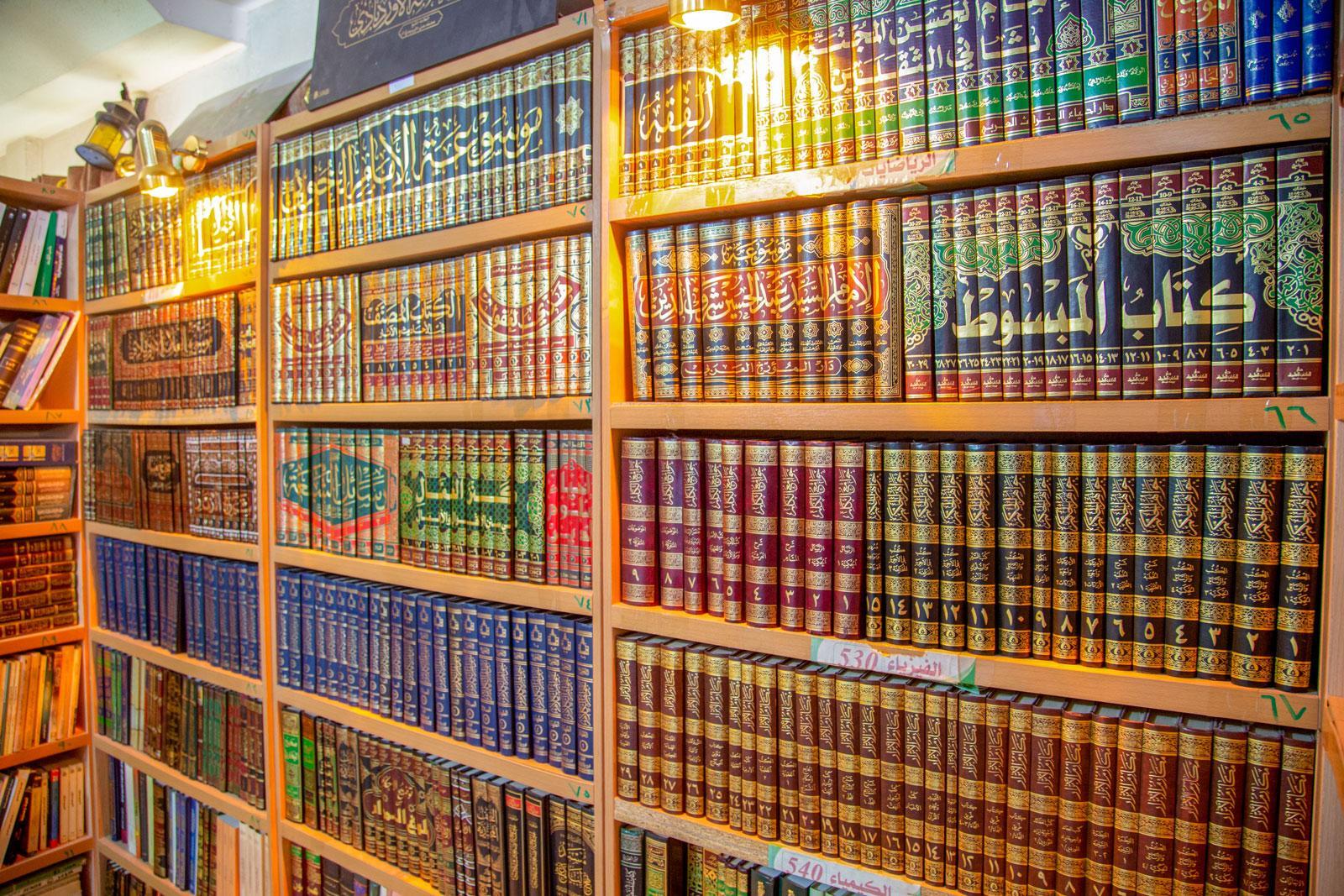
The classical Islamic scholarly tradition is transmitted through the close study of texts. At Imam Rabbani Institute, students progress through carefully selected works across the linguistic, transmitted and rational sciences.
The books in this library are texts taught at the Institute across our Alimiyyah programmes, advanced specialist study, Short Courses and focused individual study.
The books taught through the Dars-e-Nizami span these connected fields. Many belong to the wider Dars-e-Nizami Qadeem tradition, while others form part of the Institute's broader programme of classical Islamic study.
The purpose is not simply to complete a list of books. Students are guided through their language, terminology, arguments, principles and place within the wider scholarly tradition.
This is a library of books taught at Imam Rabbani Institute. Individual books belong to different programmes, levels and forms of study.
Explore the Dars-e-Nizami curriculumBrowse by science
Search by scholarly title, Arabic title, author, science or a confirmed South Asian classroom name.
66 books
Arabic Morphology
صرف بهائي
A foundational morphology text introducing Arabic word patterns, conjugation and the principles governing changes within derived forms.
فصول اكبري
A Persian instructional work organising Arabic morphology into progressive chapters on word patterns, derivation and systematic verbal formation.
تيسير أبواب الصرف
A teaching text that develops command of Arabic verb conjugation through the principal morphological forms and their regular patterns.
التصريف العزي
A concise morphology manual explaining Arabic word formation, inflection and the principal patterns used to derive verbs and nouns.
علم الصيغة
A concise morphology manual explaining Arabic word forms, their patterns and the changes that occur through derivation and inflection.
مراح الأرواح
An advanced morphology work examining verbal patterns, weak letters, phonological changes and the principles governing Arabic word formation.
Arabic Syntax
نحو مير
A foundational Persian-language syntax text introducing Arabic sentence structure, inflection and the principal categories governing nouns and verbs.
شرح مائة عامل
Al-Jāmī’s commentary on the hundred grammatical operators, explaining how they govern case and mood within Arabic constructions.
العوامل المائة
Al-Jurjānī’s concise enumeration of one hundred grammatical operators and their effects on Arabic case endings and verbal mood.
ألفية ابن مالك
Ibn Mālik’s thousand-line didactic poem presenting the rules of Arabic syntax and morphology for systematic study and memorisation.
شذور الذهب في معرفة كلام العرب
Ibn Hishām’s advanced grammar manual analysing Arabic sentence structure, inflection and the governing principles of syntactic construction.
هداية النحو
A systematic intermediate syntax manual covering inflection, sentence elements and the principal grammatical rules governing nouns, verbs and particles.
الكافية
Ibn al-Ḥājib’s influential advanced compendium presenting Arabic syntax in compressed definitions and rules that generated an extensive commentary tradition.
شرح ملا جامي
Al-Jāmī’s major commentary on al-Kāfiyah, closely analysing advanced questions of Arabic grammar, syntax and the reasoning behind grammatical rules.
حاشية عبد الغفور
Al-Lārī’s advanced gloss on Sharḥ Mullā Jāmī, examining difficult grammatical arguments, objections and interpretive choices in the commentary.
Arabic Literature
بانت سعاد
Kaʿb ibn Zuhayr’s celebrated praise poem, studied for classical vocabulary, poetic structure and its place in early Islamic literature.
مقامات الحريري
Fifty ornate prose narratives combining rhymed prose, poetry and linguistic ingenuity, studied for advanced Arabic vocabulary and literary expression.
قصيدة البردة
Al-Būṣīrī’s celebrated devotional ode praising the Prophet ﷺ, studied for its poetry, rhetoric and enduring place in Islamic literary culture.
ديوان الحماسة
Abū Tammām’s anthology of early Arabic poetry, arranged thematically and valued for its language, imagery and preservation of premodern verse.
ديوان المتنبي
The collected poetry of al-Mutanabbī, renowned for its linguistic force, rhetorical complexity and treatment of praise, wisdom and selfhood.
Arabic Rhetoric
تلخيص المفتاح
Al-Qazwīnī’s influential epitome of Arabic rhetoric, systematically treating ʿilm al-maʿānī, bayān and badīʿ through concise definitions and examples.
المطول
An advanced commentary in Balāghah examining rhetorical theory and the analysis of eloquent Arabic expression.
Islamic Jurisprudence
منية المصلي
A Ḥanafī legal manual devoted to purification and prayer, presenting their rulings, conditions, recommended practices and common invalidators.
مختصر القدوري
A foundational Ḥanafī legal compendium covering worship, transactions, family law, adjudication and other principal chapters of jurisprudence.
كنز الدقائق
Al-Nasafī’s concise Ḥanafī law manual covering worship, transactions, family law and judicial matters in densely formulated legal propositions.
السراجي في الميراث
A classical Ḥanafī inheritance manual explaining legal heirs, fixed shares, residuaries, exclusion and the calculation of estate divisions.
Principles of Islamic Jurisprudence
نور الأنوار
A classical work in Hanafi Uṣūl al-Fiqh examining the principles through which legal rulings are understood and derived.
مسلم الثبوت
An advanced uṣūl work examining legal proofs, language, analogy and juristic reasoning through both Ḥanafī and wider scholastic perspectives.
التوضيح والتلويح
Al-Tawḍīḥ presents Ḥanafī legal theory, while al-Taftāzānī’s al-Talwīḥ comments critically on its linguistic, logical and jurisprudential arguments.
Qur’anic Exegesis & its Principles
الفوز الكبير في أصول التفسير
Shāh Walī Allāh’s treatise identifies the principal themes, interpretive disciplines and recurring difficulties involved in understanding Qurʾanic exegesis.
Hadith & Hadith Methodology
نخبة الفكر
Ibn Ḥajar’s concise primer classifying reports by transmission, acceptance and rejection while defining the principal terms of hadith criticism.
نزهة النظر
Ibn Ḥajar’s commentary on Nukhbat al-Fikar expands its compressed classifications and explains the reasoning behind hadith-critical terminology.
مشكاة المصابيح
A major thematic hadith collection arranging reports on belief, worship, conduct and social life, with distinctions between source groupings.
al-Kutub al-Sittah (the Six Books)
صحيح البخاري
Al-Bukhārī’s rigorously selected hadith collection, arranged in thematic and legal chapters whose headings frequently indicate his juristic conclusions.
صحيح مسلم
Muslim’s hadith collection groups chains and textual variants together by subject, enabling close comparison of transmission routes and wording.
جامع الترمذي
Al-Tirmidhī’s collection combines hadith with evaluations of transmission, variant reports and the legal positions adopted by earlier jurists.
سنن أبي داود
Abū Dāwūd’s Sunan concentrates on hadith used in legal reasoning, arranged through the established chapters of jurisprudence.
سنن النسائي
Al-Nasāʾī’s Sunan arranges legal hadith by subject while displaying close attention to transmission routes, narrators and textual variants.
سنن ابن ماجه
Ibn Mājah’s Sunan presents hadith across creed, worship, law and conduct, including reports supplementing the other major collections.
Creed & Theology
حاشية الخيالي على شرح العقائد النسفية
Al-Khayālī’s gloss on al-Taftāzānī’s Sharḥ al-ʿAqāʾid al-Nasafiyyah, examining detailed theological arguments and their logical foundations.
شرح العقائد النسفية
Al-Taftāzānī’s influential commentary on al-Nasafī’s creed, presenting Sunni doctrine through concise textual explanation and systematic theological argument.
شرح العقائد الجلالية
A Persian commentary on a work known as al-ʿAqāʾid al-Jalāliyyah, addressing propositions of creed through scholastic theological analysis.
شرح الفقه الأكبر
A commentary explaining the doctrinal statements attributed to Imām Abū Ḥanīfah in al-Fiqh al-Akbar and their theological implications.
Logic
تهذيب المنطق
Al-Taftāzānī’s concise logical text treats conceptions, definitions, propositions and syllogisms before proceeding into its theological portion.
القطبي
Quṭb al-Dīn al-Rāzī’s commentary on al-Risālah al-Shamsiyyah, treating conceptions, propositions, syllogisms and the methods of demonstrative reasoning.
مير قطبي
Al-Jurjānī’s advanced gloss on al-Quṭbī, examining technical disputes in postclassical logic and clarifying the commentary’s compressed arguments.
ملا حسن
A Farangī Maḥall commentary on Sullam al-ʿUlūm, developing its discussions of definition, predication, propositions and syllogistic reasoning.
حمد الله
A commentary on Sullam al-ʿUlūm that expands its concise logical arguments and records the analytical tradition of South Asian scholarship.
سلم العلوم
Al-Bihārī’s compact logic text presents definition, predication, propositions, syllogisms and demonstration in a form designed for advanced commentary.
الرسالة القطبية في تحقيق معنى التصور والتصديق
Quṭb al-Dīn al-Rāzī’s focused logical treatise investigating the meaning and division of knowledge into conception and assent.
شرح سلم العلوم لقاضي مبارك
Qāḍī Mubārak’s advanced commentary on Sullam al-ʿUlūm, closely analysing its formulations and disputed questions in formal logic.
حاشية ملا جلال على تهذيب المنطق
Al-Dawwānī’s gloss on the logical portion of al-Taftāzānī’s Tahdhīb, studied for its exact analysis of postclassical logical problems.
Dialectics & Scholarly Debate
الرسالة الرشيدية
A commentary on al-Jurjānī’s dialectical treatise, explaining the rules of definition, objection, proof and disciplined scholarly disputation.
Rational & Philosophical Sciences
هداية الحكمة
Al-Abharī’s concise philosophical manual surveys logic, natural philosophy and metaphysics, becoming a central text in postclassical ḥikmah education.
شرح هداية الحكمة للميبذي
Al-Maybadhī’s commentary on Hidāyat al-Ḥikmah explains its discussions of natural philosophy and metaphysics through detailed post-Avicennan argument.
الهدية السعيدية
Faḍl-i Ḥaqq Khayrābādī’s treatise on natural philosophy, examining bodies, motion, place and related questions within the ḥikmah tradition.
شرح هداية الحكمة
Mullā Ṣadrā’s commentary on al-Abharī’s Hidāyat al-Ḥikmah, developing its natural philosophy and metaphysics through post-Avicennan analysis.
الشمس البازغة
Al-Jawnpūrī’s advanced ḥikmah work examines difficult questions in natural philosophy and metaphysics within the South Asian rational-sciences tradition.
حاشية مير زاهد على الأمور العامة
Mīr Zāhid’s gloss on the general metaphysical discussions of Sharḥ al-Mawāqif, addressing existence, quiddity, unity and causation.
Mathematical Sciences
خلاصة الحساب
A systematic arithmetic compendium covering whole numbers, fractions, roots, proportions, algebraic procedures and practical methods of calculation.
تحرير أصول إقليدس
Al-Ṭūsī’s Arabic recension of Euclid’s Elements presents definitions, postulates and geometrical demonstrations within the traditional mathematical curriculum.
The Study of the Heavens
تشريح الأفلاك
A classical work concerned with astronomy and the structure and movement of the celestial spheres.
التصريح في شرح التشريح
Imām al-Dīn al-Lāhūrī’s commentary on Tashrīḥ al-Aflāk, expanding its account of celestial spheres, planetary motions and astronomical models.
شرح الملخص في الهيئة
Qāḍīzādah al-Rūmī’s commentary on al-Chaghmīnī’s astronomical epitome, explaining the Earth, celestial spheres and observed motions of the heavens.
Spiritual Development & Conduct
الرسالة القشيرية
Al-Qushayrī’s foundational manual of Sufi doctrine, terminology, spiritual stations, conduct and biographies of early masters of the path.
مکتوبات امام ربانی
The collected letters of Imām Rabbānī Aḥmad Sirhindī, covering spiritual development, doctrine and the path of sulūk.
How we study
Students are guided through each work as part of a wider discipline. The objective is to develop understanding and scholarly aptitude rather than merely complete a reading list.
Our teaching methodProgramme connection
Individual texts sit within a deliberate progression through the sciences. The work studied by each student depends upon their programme, level and stage.
Questions
Dars-e-Nizami study progresses through classical works across the linguistic, transmitted and rational sciences. The precise selection and progression vary between institutions, programmes and stages of study.
Yes. This library is intended to present classical texts taught at Imam Rabbani Institute across its programmes and courses. Individual books may belong to different programmes or stages of study.
No. The library brings together books taught across different programmes, levels and forms of study. The books studied by an individual student depend upon their programme and stage.
No. Some texts from the wider Alimiyyah curriculum may also be offered for individual study through Short Courses or other focused study.
Mantiq, Hikmah and related rational sciences train students to understand concepts, analyse arguments, examine proofs and follow objections and responses within advanced classical discussions.
Many of the classical works are studied in Arabic. The wider curriculum also includes texts associated with Persian and South Asian scholarly traditions. Students are guided through the original language and terminology of the work being studied.
Manqulat are the transmitted Islamic sciences, including Qur’an, Tafsir, Hadith, Fiqh and Usul. Maqulat are the rational and intellectual disciplines, including Mantiq, Kalam, Hikmah, Munazarah, mathematics, geometry and astronomy.
The Dars-e-Nizami page explains the curriculum’s history, sciences, progression and teaching method.
Explore the Dars-e-Nizami curriculum